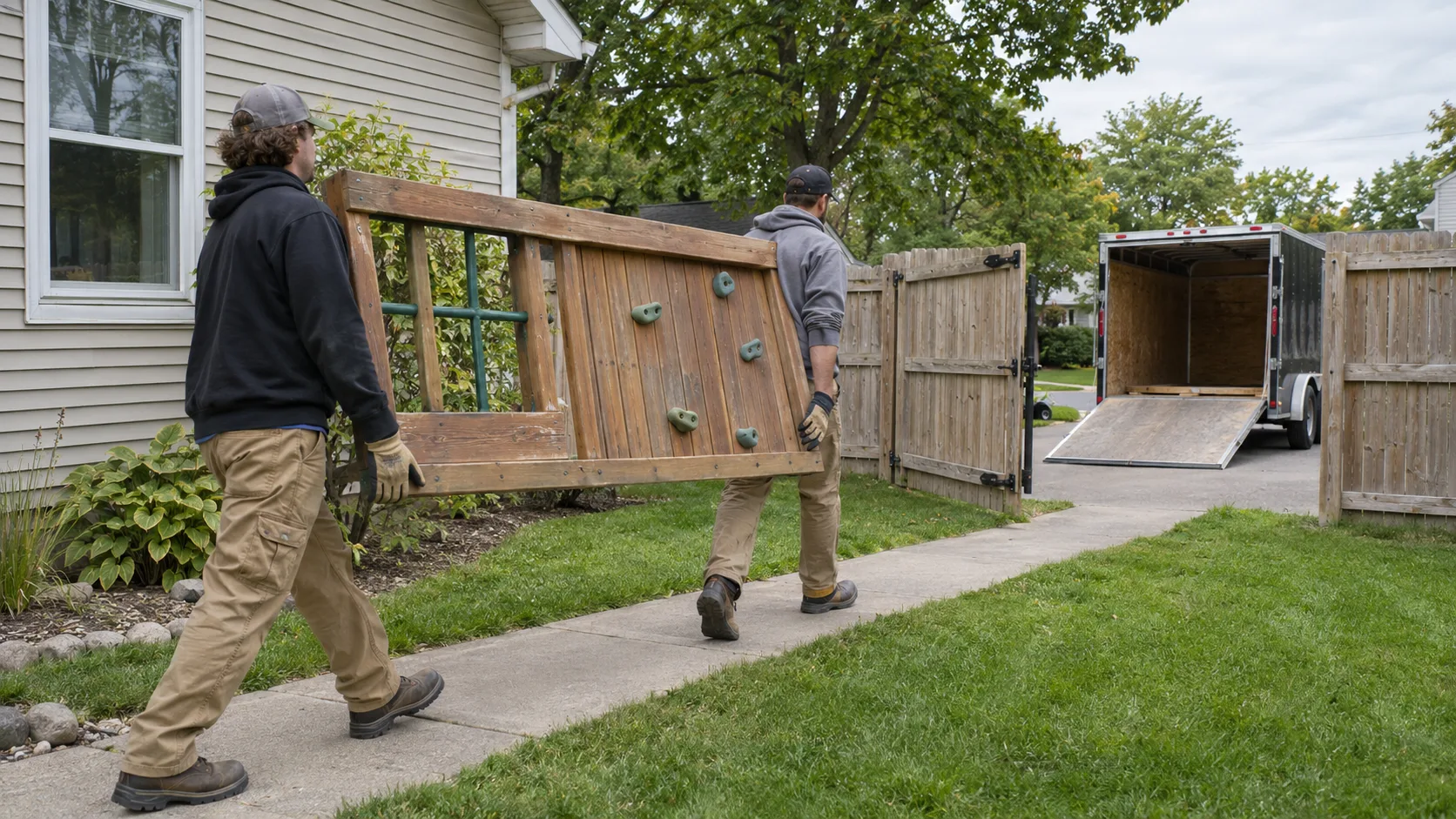
Begin at the loading point
Choose a practical place for the truck or trailer. Consider street rules, driveway slope, overhead branches, parked vehicles, and whether the surface can support loading activity.
Work backward to the playset
Walk the route in reverse and note every constraint. Measure gates, but also inspect the space needed to turn a long beam or panel. Protect sprinkler heads and identify soft areas that should be avoided.
Route details to share
- Approximate carry distance
- Narrowest opening and tightest turn
- Steps, slopes, retaining walls, or uneven ground
- Overhead branches, wires, and roof edges
- Where the vehicle can park and load
Weather changes the ground
Rain and spring thaw can make turf soft and loading areas less accessible. Mention recent ground conditions if the route crosses a lawn. Do not promise access across a neighboring property unless you have permission.
Keep the route clear
Move portable objects before the crew arrives and open gates. A clear route supports safer carrying and makes the estimate conversation more accurate.
Next step
For a job-specific conversation, review Playset Hauling and call with the structure, access, and loading details.